
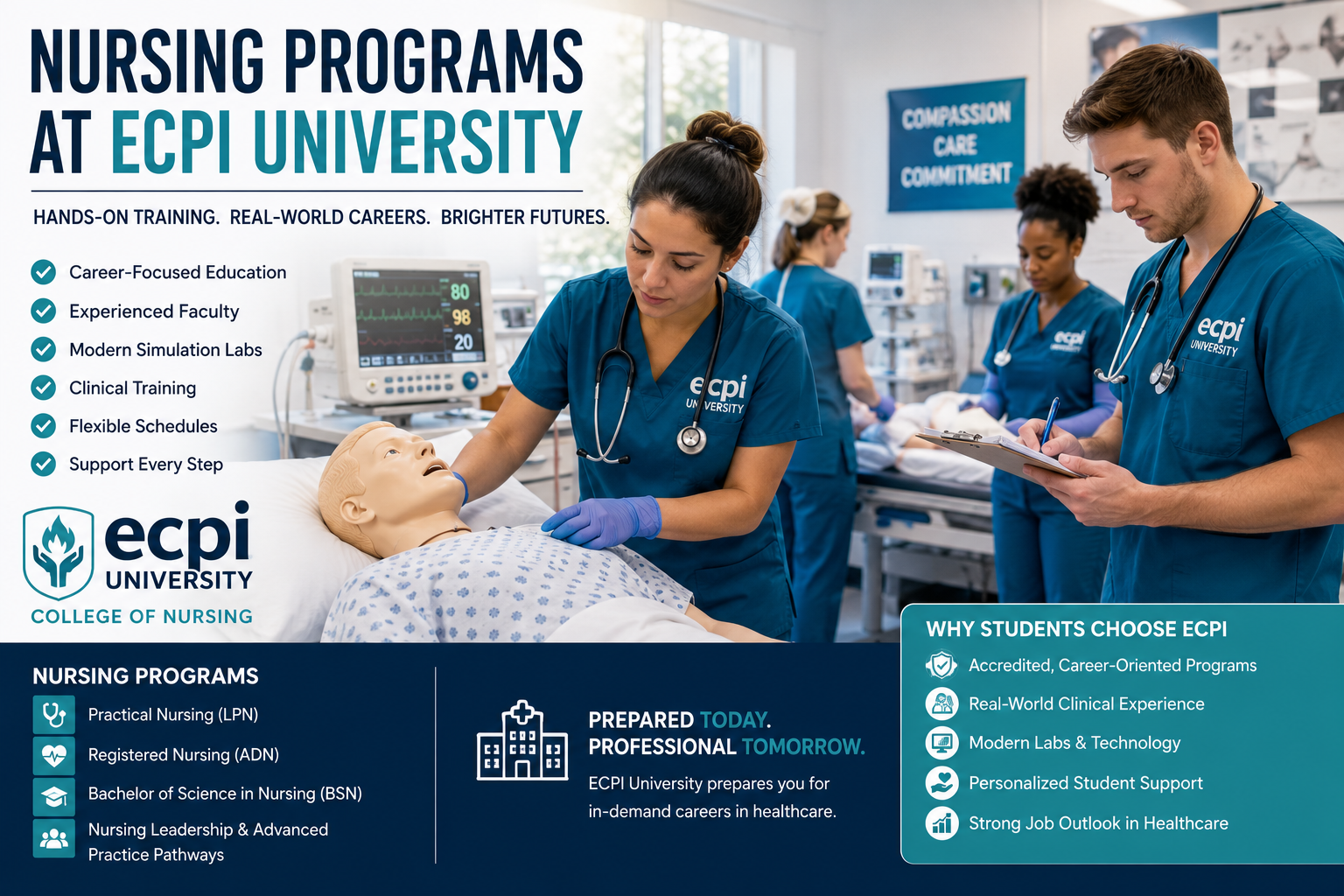

Nursing Programs at ECPI University (2026), Healthcare is one of the fastest-growing industries in the United States, and qualified nurses remain in high demand. As hospitals, clinics, and healthcare organizations continue to expand, the need for skilled nursing professionals is expected to remain strong. For students who want a rewarding career helping others, Nursing Programs at ECPI University offer career-focused education with practical clinical experience.
ECPI University is known for its accelerated learning model and hands-on approach to education. Nursing students learn essential healthcare skills through classroom instruction, simulation laboratories, and supervised clinical training. This combination helps graduates prepare for real healthcare environments and future professional licensing requirements.
In this guide, you’ll learn about the nursing programs available at ECPI University, admission requirements, student life, clinical experiences, career opportunities, and why many students choose ECPI for nursing education.
Why Choose ECPI University for Nursing?
Many students select ECPI University because its nursing programs emphasize practical learning and career readiness.
Some of the key advantages include:
- Career-focused nursing education
- Experienced nursing faculty
- Modern simulation laboratories
- Clinical learning opportunities
- Accelerated degree options
- Small class sizes
- Student academic support
- Career Services assistance
These features help students build confidence while developing the knowledge and practical skills needed for a healthcare career.
Nursing Programs Available
ECPI University offers nursing pathways designed to prepare students for professional practice. Program availability may vary by campus.
Students may find opportunities to study topics related to:
- Practical Nursing
- Registered Nursing
- Bachelor-level Nursing Education
- Patient Care
- Clinical Practice
- Health Assessment
- Nursing Leadership
Each program combines classroom learning with hands-on clinical experience.
What Students Learn
Nursing education focuses on both medical knowledge and patient care.
Students typically study subjects such as:
- Human Anatomy
- Physiology
- Microbiology
- Pharmacology
- Nutrition
- Patient Assessment
- Medical-Surgical Nursing
- Pediatric Nursing
- Mental Health Nursing
- Community Health
These courses prepare students to care for patients in a variety of healthcare settings.
Hands-On Clinical Training
Clinical training is one of the most important parts of nursing education.
Students gain supervised experience in healthcare environments where they learn to:
- Communicate with patients
- Monitor vital signs
- Assist with patient care
- Administer medications under supervision
- Practice infection control
- Document medical information
- Work as part of a healthcare team
Clinical experience helps students apply classroom knowledge while building confidence.
Modern Simulation Labs
Before entering clinical settings, students often practice skills in simulation laboratories.
Simulation labs allow students to:
- Practice nursing procedures safely
- Respond to emergency situations
- Improve communication skills
- Build clinical decision-making abilities
- Develop teamwork
This controlled learning environment helps students prepare for real patient care.
Experienced Nursing Faculty
Students learn from instructors with professional healthcare experience.
Faculty members help students by:
- Explaining complex medical concepts
- Demonstrating clinical procedures
- Providing academic guidance
- Offering career advice
- Supporting clinical skill development
Experienced instructors play an important role in student success.
Flexible Learning Options
Many students balance education with work or family responsibilities.
Depending on the campus and program, ECPI University may offer flexible scheduling options that help students manage their studies more effectively.
Students should review the latest program formats and schedules before applying.
Career Opportunities After Graduation
Graduates of nursing programs can pursue careers in many healthcare settings.
Possible workplaces include:
- Hospitals
- Medical clinics
- Physician offices
- Rehabilitation centers
- Long-term care facilities
- Community health organizations
- Outpatient care centers
- Home healthcare services
Healthcare continues to provide strong employment opportunities for qualified nursing professionals.
Career Paths
After completing a nursing education and meeting applicable licensing requirements, graduates may pursue roles such as:
- Registered Nurse (RN)
- Licensed Practical Nurse (LPN), where applicable
- Emergency Room Nurse
- Pediatric Nurse
- Medical-Surgical Nurse
- Community Health Nurse
- Home Health Nurse
- Clinical Care Coordinator
Career opportunities depend on education level, licensure, experience, and employer requirements.
Skills Nursing Students Develop
Successful nurses combine technical knowledge with interpersonal skills.
Students strengthen abilities such as:
- Communication
- Critical thinking
- Patient care
- Clinical decision-making
- Teamwork
- Time management
- Compassion
- Professional ethics
These skills are valuable throughout a nursing career.
Career Services
ECPI University provides career support to help students prepare for employment.
Career Services may assist students with:
- Resume preparation
- Interview coaching
- Career planning
- Job search strategies
- Professional networking
- Employment resources
Using these services can help graduates begin their careers with confidence.
Admission Requirements
Admission requirements vary by program and campus.
Applicants generally need:
- A completed application
- High school diploma or equivalent
- Official academic transcripts
- Any required entrance assessments
- English language proficiency for eligible international applicants
- Additional documents requested by the university
Students should always review the current admission requirements before applying.
Tips for Future Nursing Students
If you are planning to study nursing, consider these tips:
- Build strong science and biology knowledge.
- Improve communication skills.
- Practice effective time management.
- Stay organized throughout your studies.
- Take clinical learning seriously.
- Learn basic medical terminology.
- Develop empathy and professionalism.
These habits can support both academic success and future patient care.
Frequently Asked Questions
Is ECPI University a good choice for nursing?
ECPI University is known for career-focused education, practical learning, simulation labs, and clinical experiences that help prepare students for healthcare careers.
Do nursing students complete clinical training?
Yes. Clinical education is an essential part of most nursing programs and allows students to gain supervised experience in healthcare settings.
What careers are available after graduation?
Graduates may pursue nursing careers in hospitals, clinics, rehabilitation centers, community health organizations, long-term care facilities, and other healthcare environments, depending on their education and licensure.
Can international students apply?
Eligible international students may apply if they meet ECPI University’s admission requirements and any program-specific criteria.
Final Thoughts
Nursing Programs at ECPI University provide students with a strong combination of classroom education, simulation-based learning, and supervised clinical experience. Through experienced faculty, modern training facilities, and career-focused instruction, students build the knowledge and practical skills needed for success in the healthcare industry.
If your goal is to make a positive impact on patients’ lives while building a stable and rewarding career, ECPI University’s nursing programs offer a pathway to professional growth and lifelong learning.
